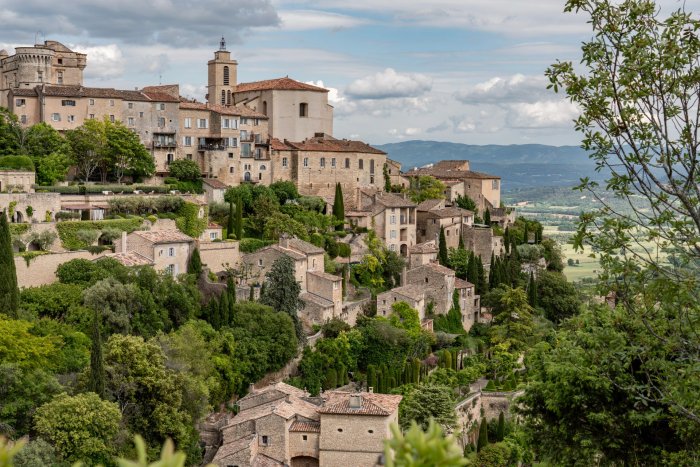
Ask an American what Sancerre is and you will usually hear "a white wine." That is true, but the wine took its name from somewhere: a small town on a round hill in the very center of France, with steep lanes, stone houses and a single medieval tower that you can see from miles around.
That town is the subject here. The wine gets a short section near the end, and a full guide of its own elsewhere on this site. Everything else is about the place where Cœur de France students live, shop and practice their French every day.
Where Sancerre is
Sancerre sits in the Cher department, in the Centre-Val de Loire region, about two hours south of Paris. It belongs to the old province of Berry, and it is often described as lying in the geographical heart of France, the cœur de France.
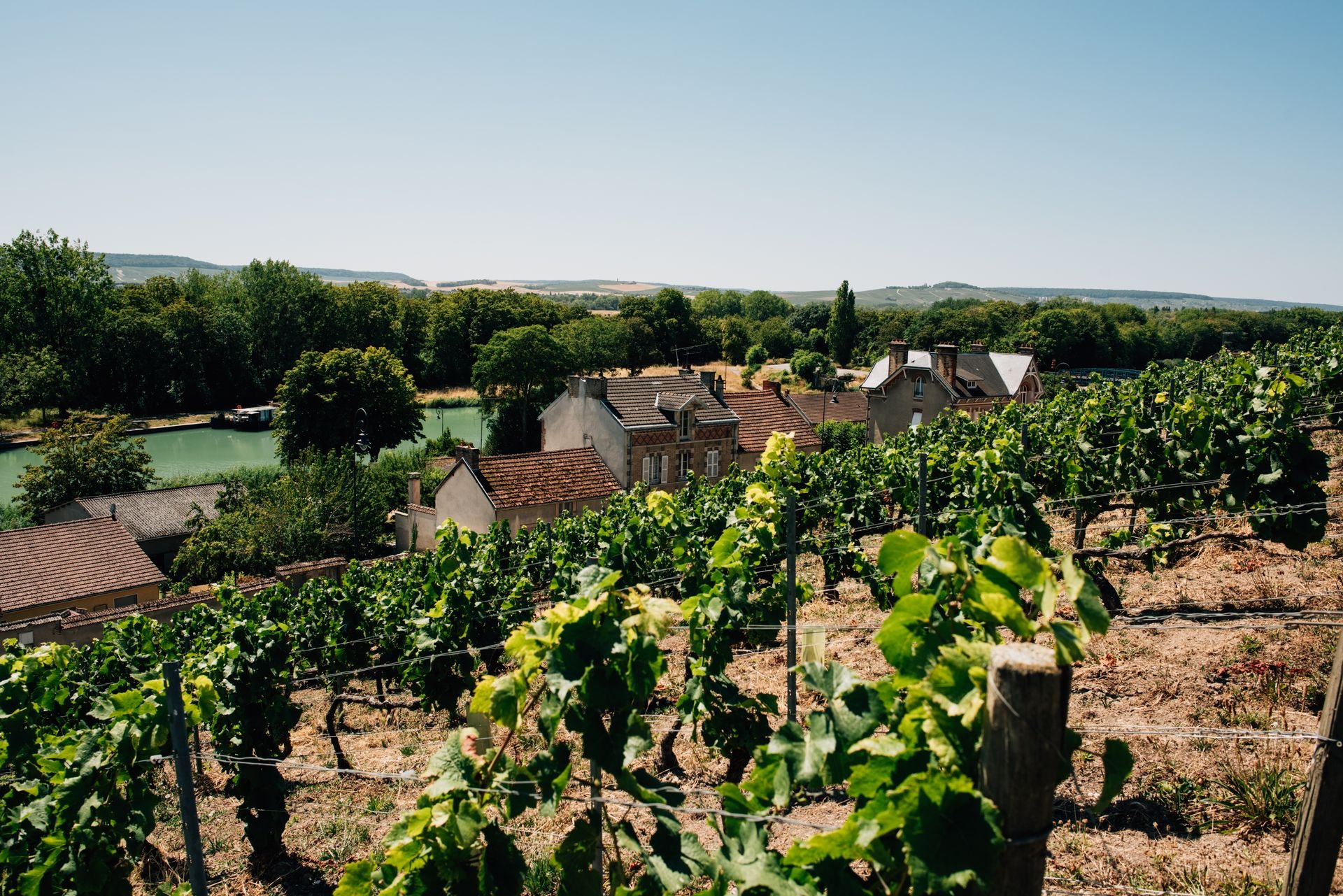
The town is built on a hilltop at roughly 300 meters (about 1,000 feet) above sea level. Below it, to the east, the Loire runs a few kilometers away, with the town of Saint-Satur and the river bank at the foot of the slope. Vineyards cover the surrounding hills on every side, which is why the view from the top looks like a patchwork quilt in summer and a pattern of bare, dark lines in winter.
It is a small place, with fewer than 1,500 inhabitants. Everything in the old town is within walking distance, but expect to climb: a published testimonial on this site recommends walking shoes, and it is right.
A short history in stone
Sancerre was the seat of powerful medieval counts, and a castle stood on the summit for centuries. Very little of it remains, and the reason is the town's role in the Wars of Religion.
The siege of 1573
In the 1570s Sancerre was a Protestant stronghold. After the Saint Bartholomew's Day massacre of 1572, it became a refuge, and in January 1573 a royal army under Claude de La Châtre laid siege to it. The town held out until August, roughly seven to eight months, and the inhabitants suffered a terrible famine before they surrendered.
We know a great deal about those months because a Protestant pastor who lived through them, Jean de Léry, published an eyewitness account soon after. It is still read by historians today, and it describes people reduced to eating leather and parchment to survive.
The tower that stayed
Sancerre's fortifications were dismantled after the wars. The school's own history of its building records that in 1621 the Prince of Condé lodged in what is now the school to oversee the demolition of the feudal castle and the town ramparts, on the order of Louis XIII, after a rebellion by the townspeople.
One tower escaped: the Tour des Fiefs, a round 14th-century tower and the last remaining piece of the counts' castle. It is a listed historic monument and the town's landmark, visible from the vineyards and from the Loire. Some school apartments share a terrace facing it, and climbing to the top on a clear day gives you a wide view of the vineyards and the river valley. Opening times vary by season, so check with the Sancerre tourist office before you go.
Walking the ramparts
Parts of the old ramparts still circle the town, and a walk along them is the best introduction to Sancerre. On one side, the old streets and roofs; on the other, the drop to the vineyards and the plain. Go slowly: you will want to stop at every viewpoint.
Chavignol and its goat cheese
Just below Sancerre, in a small valley, lies the village of Chavignol. It is part of the commune of Sancerre, and its name is famous for two reasons: steep vineyards, and a small round goat cheese called the crottin de Chavignol.
The crottin has had its own protected designation of origin since 1976. It is eaten young and soft, or aged until it becomes hard, dry and much stronger. Locally it is served warm on salad, on bread, or simply with a glass of white Sancerre. Goat cheese farms are among the visits the school lists on its excursions and activities page, and a British family's account on the news page names the goat farm visit as their son's highlight of the week.
For a student, the cheese shop is also a lesson. Asking for un crottin bien sec (a well-aged one) or plutôt frais (rather fresh) is the kind of real exchange the classes prepare you for.
Sancerre out of season
The town has two personalities. In July and August it fills with visitors, cyclists and second-home owners. The rest of the year it is quiet, sometimes very quiet. In a Telegraph article reproduced on our news page, the writer Anthony Gardner calls Sancerre "in effect two towns", and describes searching the empty streets one May evening for an open shop.
That calm surprises some visitors, and it is worth knowing before you come. Many shops close at lunchtime and on Sunday afternoons, and evenings can be peaceful to the point of silence. Becca Hensley, writing in the Austin American-Statesman (also on the news page), arrived on a Sunday afternoon in early June to find every shop and café closed.
For a language learner, though, the quiet is an advantage. The baker, the cheese seller and the waiter at the café on the square have time to talk, and the site's own press coverage describes shopkeepers who gently correct students' pronunciation. In a big city you might be answered in English; here, French is simply the language of daily life.
Getting your bearings
- Walk the ramparts on your first afternoon.
- Find the Tour des Fiefs: from anywhere in town, it tells you which way is up.
- Note the opening hours of the bakery and the grocery near your apartment.
- Plan Sunday lunch ahead: many places close in the afternoon.
- Take the lane down to Chavignol, and save energy for the climb back.
The school's château
In the middle of the old town stands La Thaumassière, the building that houses Cœur de France. It was built at the end of the 16th century for César Thaumas de la Thaumassière, physician to the Prince of Condé, and it has a spiral staircase tower, a vaulted wine cellar, and carved stone figures on the roof, including a winemaker and a drinker.
Its four centuries of owners, from a revolutionary squire to a savings bank, are told on the page about our school building, and what to look for in its courtyard is in our guide to Loire Valley castles near Sancerre. Today the ground floor holds five classrooms, and three apartments occupy the upper floors, alongside the other school apartments around town.
And yes, the wine
Sancerre became a protected wine appellation in 1936, and the name now covers whites from sauvignon blanc and reds and rosés from pinot noir, grown on the hills around the town and Chavignol. It is the reason most visitors know the name, and the reason the countryside looks the way it does.
If you want to understand the wine properly, read our guide to Sancerre and Loire Valley wines for learners. And if you plan to explore further, our guide to Bourges, La Charité and day trips from Sancerre covers the cathedral town and the priory down the river.
Before you arrive, it also helps to say the name right: our short article on how to pronounce Sancerre covers that, along with 20 words you will use in town every day.
To live in this town for a week or more while you learn, compare the French programs and ask for a no-obligation price quote for your dates.